Mental Health Coaching and Outdoor Experiences
Struggle with Anxiety while Climbing?
Read This.
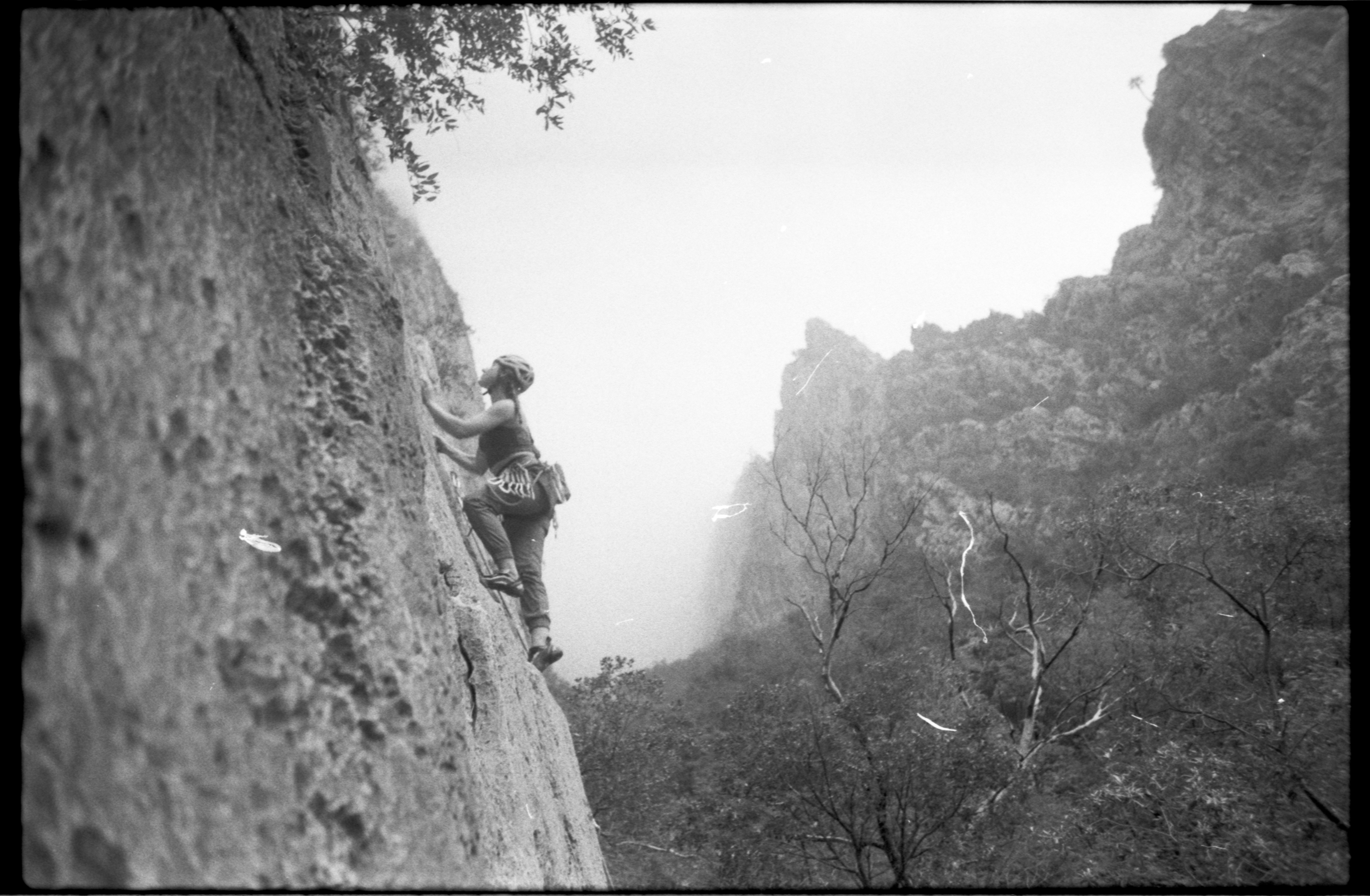
Poison Canyon, Utah
Asher hung from a rope in his harness about 20 feet off the ground in a remote corner of the Utah desert. He was about ready to give up and had clearly lost any hope he had in himself. I pulled the rope tighter on his harness as he resigned to give it one more go. I could tell he was spiraling deeper into anxiety and self-criticism. His climbing shoes slapped and slid all over the slick sandstone, his forearms quickly burning out under poor technique and fear. He quickly stopped moving. He looked down at me and said that he wanted to come down. I tell Asher that I’m happy to lower him to the ground but maybe we try an exercise first and then come down. He agrees.
I ask Asher what he’s noticing in his body.
“I feel a ton of anxiety in my chest.”
I ask him if he can just sit with the anxiety on the wall.
“Don’t change it, don’t distract yourself, don’t push it away. Fully embrace that this is your experience right now and offer gratitude to this part of you for trying to keep you safe. “
Asher slumps against the wall, still hanging from the rope, and closes his eyes. The desert of Poison Canyon stretches out all around him providing a serene backdrop to his internal struggle. He breathes quietly for about a minute and says that he notices that the anxiety is still there but it has lessened.
We discuss his internal dialogue and I ask him to “Tell the Internal Story” and then to “Tell the External Story”. His internal story is that he is weak and incompetent and can never finish anything. His external story is “I’m struggling to climb this rock”. He takes a few more deep breaths and sits in silence. He is visibly more centered. I ask him if he still wants to come down. He says he’ll try it one last time.
Asher starts pulling on the sandstone edges and scrapping his feet up the crux again and somehow manages to latch the hold that he had been missing before. He pulls through, sweating and yelling all the way to the top of the pedestal while his friends cheer him on. Asher eventually slaps the chains and is clearly elated.
There are many different aspects of this experience that we could zoom in on; building resilience, challenging old narratives, establishing self-efficacy, etc. However, I want to focus on two concepts that Asher practiced that will be helpful for you in your climbing game, as well as in your daily life: Cognitive Defusion and a simple practice of Awareness and Acceptance.
Mindfulness Practices for Anxiety while Climbing
Cognitive defusion comes from Acceptance and Commitment Therapy (ACT) and is the process of disidentifying from our thoughts.
“Cognitive defusion is the process of loosening the grip of thinking on identity, promoting psychological flexibility by creating distance from thoughts and fostering mindful observation. Cognitive defusion facilitates a more objective perspective on thoughts, empowering individuals to relate to their mental processes with greater openness and adaptability, key elements in achieving psychological flexibility.”
My approach to cognitive defusion is to “Tell the Internal Story” (give a subjective interpretation) and then afterward “Tell the External Story” (recount the events from a purely objective standpoint).
For example, let’s say that I lost my keys and was late to work. This would provide a big trigger for me. I could “Tell the Internal Story”/recount the events subjectively: ” I’m a f***ing idiot because I literally can never keep track of anything. My coworkers are going to think I’m a dumbass because I can’t even keep up with my car keys. I would honestly fire me if I was my boss.”
I would then “State the Facts”/recount the events objectively: ” I misplaced my car keys and I’m going to be late to work.”
The two examples beside each other are almost comical. The subjective perspective is so over the top. The objective description is just stating the facts, which honestly isn’t that big of a deal in the grand scheme of things.

Awareness and Acceptance is simple; yet surprisingly hard to practice in the heat of the moment.
So, you notice you’re having a large emotional response to some stimuli. Try the following exercise:
- Take a moment and see what you can hear. Stop what you’re doing, close your eyes, take a deep breath, and just listen to the environment around you. This brings you to the present moment and can begin to decelerate the mental spiral.
- Next, notice what sensations are present in your body. Where do you feel them and how do they present themselves? I.e. “I feel a knot in my stomach” “My chest feels tight” ” I feel anxious energy in my legs”
- Combine breath and somatic (body) awareness and breathe into those sensations in the areas of your body that you notice them.
- Practice acceptance of your current situation as it is. I find it helpful to repeat a simple phrase as I’m continuing to breathe: “I can control how I respond”.
Try these mindfulness techniques out if you notice yourself beginning to spiral. These can be helpful when you find yourself getting frustrated on your project or when you’re struggling with filing your taxes. The goal of both of these practices is to bring you back to the present moment and put you back into a healthy connection with your emotions. Let me know how it goes in the comments 🙂
 Internal Ascent